


PR22 Ultrasonic Pulse Transmitter and Receiver
Key words:
Product Classification:
- Product Features
- Applications
- Technical Parameter
- Standard Configuration
-
Product Advantages
· Maximum bandwidth: 30 MHz
· Internal trigger with repetition frequency: 8 adjustable levels (4 Hz–2 kHz)
· Pulse width adjustable from 15 to 1000 ns
· Launch voltage with 8 selectable levels, up to a maximum of 400 V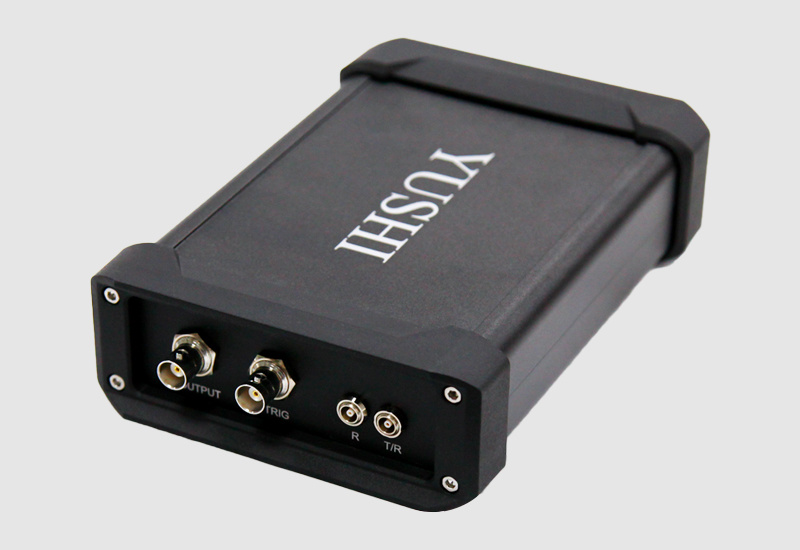
Product Advantages
· Damping value settings are adjustable across multiple levels.
· Supports single‑transmit‑single‑receive mode and pulse‑echo mode.
· 60 dB receive gain rangeReplacing the traditional pulse‑generating receiver
· PR22 Pulse Generator Receiver
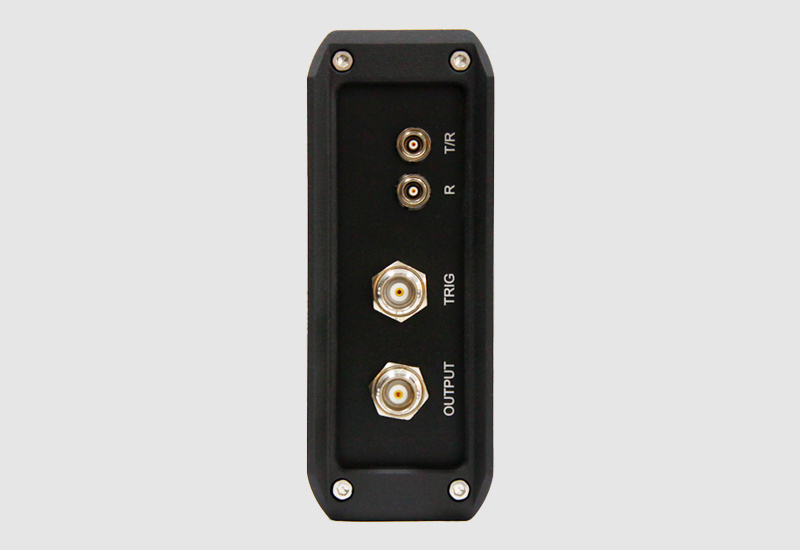
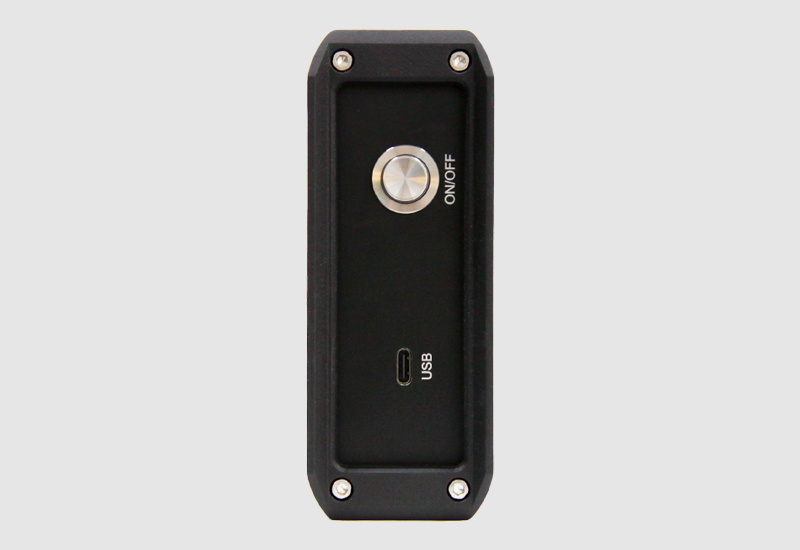
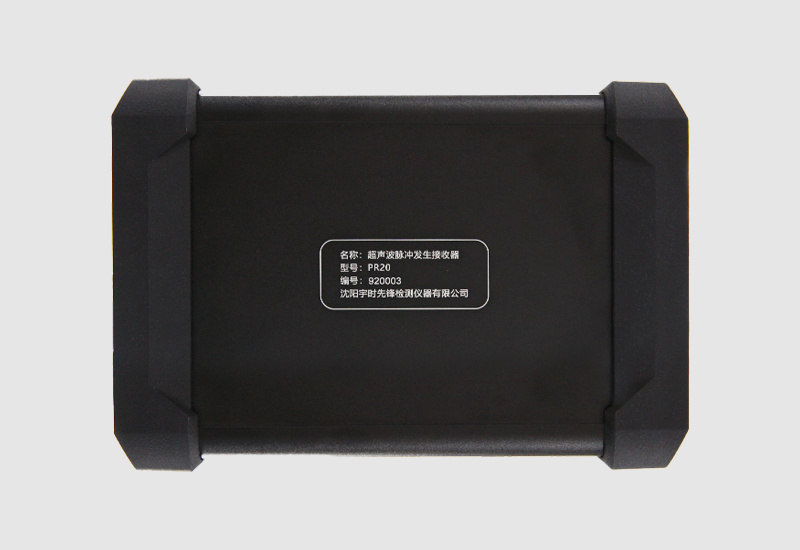
The PR22, developed and manufactured by Shenyang Yushi Xianfeng, is a high-performance ultrasonic pulse generator and receiver controlled by a computer. The instrument can be connected to a computer or an oscilloscope and is used to facilitate ultrasonic flaw detection, thickness measurement, ultrasonic transducer testing, and more, making it widely applicable in nondestructive testing, materials analysis, and other fields.
Host Specifications
· Overall dimensions
18.4cm*12.6cm*5cm
· Weight
568g
· Operating temperature
0-55℃
Test platform
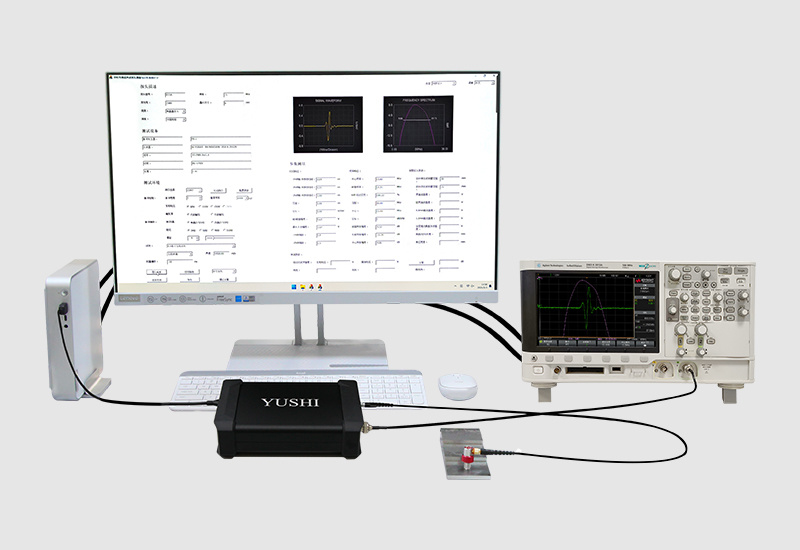
· Build an ideal testing platform
The pulse‑generation receiver connects to a computer and an oscilloscope, and, using the instrument’s built‑in control software, it can perform ultrasonic flaw detection, material thickness measurement, transducer performance analysis, and material characterization.
performance analysis and other related tasks. In addition, when used in conjunction with dedicated ultrasonic transducer testing software, it can
It is sufficient to build an ultrasonic transducer detection system.
-
Applications of the test platform in nondestructive testing and other fields
Probe Performance Testing
During ultrasonic testing, the transducer plays a crucial role; its performance directly affects the accuracy and reliability of the flaw‑detection results. The test platform enables measurement and analysis of the transducer’s echo signals in both the time domain and the frequency domain under operating conditions.
Material Analysis
Based on the principle of ultrasonic pulse reflection, this method assesses the mechanical properties and quality of materials by measuring the velocity of ultrasonic waves propagating through them. It is widely used in materials engineering, particularly for material evaluation and quality control.
Ultrasonic flaw detection and thickness measurement
Using the principle of ultrasonic pulse reflection, waveforms are measured and analyzed. Flaw detection is employed to determine the presence, size, and location of defects. Thickness measurement, on the other hand, allows for the determination of a component’s thickness by leveraging the known sound velocity of the material and the time interval between two reflected echoes.

-
Control parameters
Control parameters
Scope
Step
Launch area
Launch voltage
50V, 100V, 150V, 200V, 250V, 300V, 350V, 400V
Select
Pulse width
15~1000 ns
5ns
Repetition Rate (Internal Trigger)
20 Hz, 50 Hz, 100 Hz, 200 Hz, 500 Hz, 800 Hz, 1 kHz, 2 kHz
Select
Trigger Source
Internal trigger, external trigger
Select
Receiving Area
Single/Dual Crystal
Single crystal (pulse‑echo), dual crystal (through‑transmission)
Select
Damping
50Ω, 59Ω, 66Ω, 83Ω, 100Ω, 145Ω, 196Ω, 500Ω
Select
Gain
0–60 dB
1dB
Technical Specifications
Pulse type
Negative square-wave pulse
Rise time
3.5 ns (typical)
Synchronous output
3V, 100 ns, compatible with TTL and CMOS
External Trigger
Positive pulse: 3–5 V; triggered on the rising edge.
Bandwidth
1.5–30 MHz (-3 dB)
Excitation Mode
Internal trigger: 4 Hz to 2 kHz; External trigger: 0 to 5 kHz
Work style
Single-crystal (pulse-echo) or dual-crystal (through-transmission)
Input impedance
500Ω (dual crystal)
Output impedance
50Ω
Output voltage
±5V
-
Host Specifications
External dimensions
18.4cm*12.6cm*5cm
Operating temperature
0-55℃
Weight
568g
Standard configuration
Host PR22
1 unit
Connection cable Q9-Q9
2 items
Communication USB drive
1 piece
USB Type-C / Data cable
1 item
Control software (Stored on a USB drive)
1 serving
Related Accessories
Product Inquiry

Contact Us
Address: No.81 -43 Puhe Road, Shenbei New District, Shenyang, Liaoning, China